
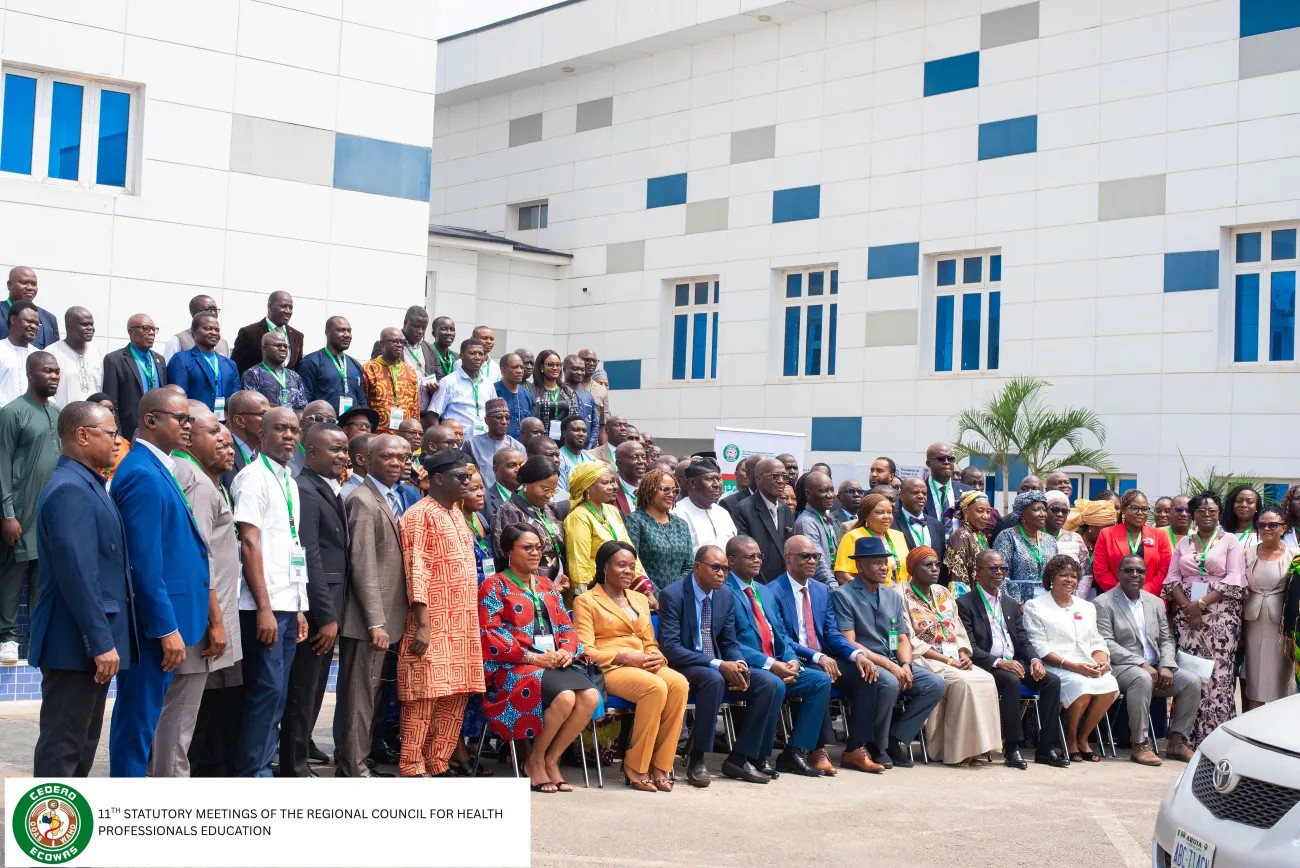
Access to a competent health professional should not depend on where a person lives. Bringing that goal closer to reality is the focus of the 11th Statutory Meeting of the Regional Council for Health Professionals’ Education in the ECOWAS region, taking place in Abuja, Nigeria, from 2 to 4 November 2026.
Convened by the West African Health Organisation (WAHO), the specialised Institution of the Economic Community of West African States (ECOWAS) responsible for health issues, the meeting brings together leaders from health training institutions, professional colleges and regulatory bodies to strengthen the education of those entrusted with people’s care.
Across the region, shortages of qualified health workers and their uneven distribution continue to limit access to services, particularly for remote and vulnerable communities. Addressing these gaps requires both sound training and conditions that enable professionals to remain and serve where they are needed.
Speaking at the opening, the Director General of WAHO, Professor Palokinam T. PITCHE, stressed that a well-trained, motivated and equitably distributed workforce is essential to bringing care closer to populations. He highlighted regional cooperation in training, sharing expertise and recognising qualifications as ways to support this ambition.
The Chair of the Regional Council for Health Professionals’ Education, Professor Agnon Ayelola Koffi BALOGOU, emphasised that safer care begins long before a health professional reaches a patient’s bedside. It depends on rigorous teaching, quality clinical placements, effective supervision and credible assessments. He called for decisions backed by clear responsibilities, realistic deadlines and measurable follow-up.
In the opening address delivered on behalf of the Honourable Coordinating Minister of Health and Social Welfare of the Federal Republic of Nigeria, Professor Muhammad Ali Pate, emphasis was placed on developing the right competencies and ensuring that qualified professionals serve communities where needs are greatest.
Over the three days, participants are expected to finalise a draft proposal for recognising degrees and certificates across ECOWAS and a regional action plan for training in priority health workforce areas.
WAHO also plans to evaluate its Health Workforce Development Programme in 2027, helping identify gaps and guide future support so that regional progress in training translates into better care for communities.


