
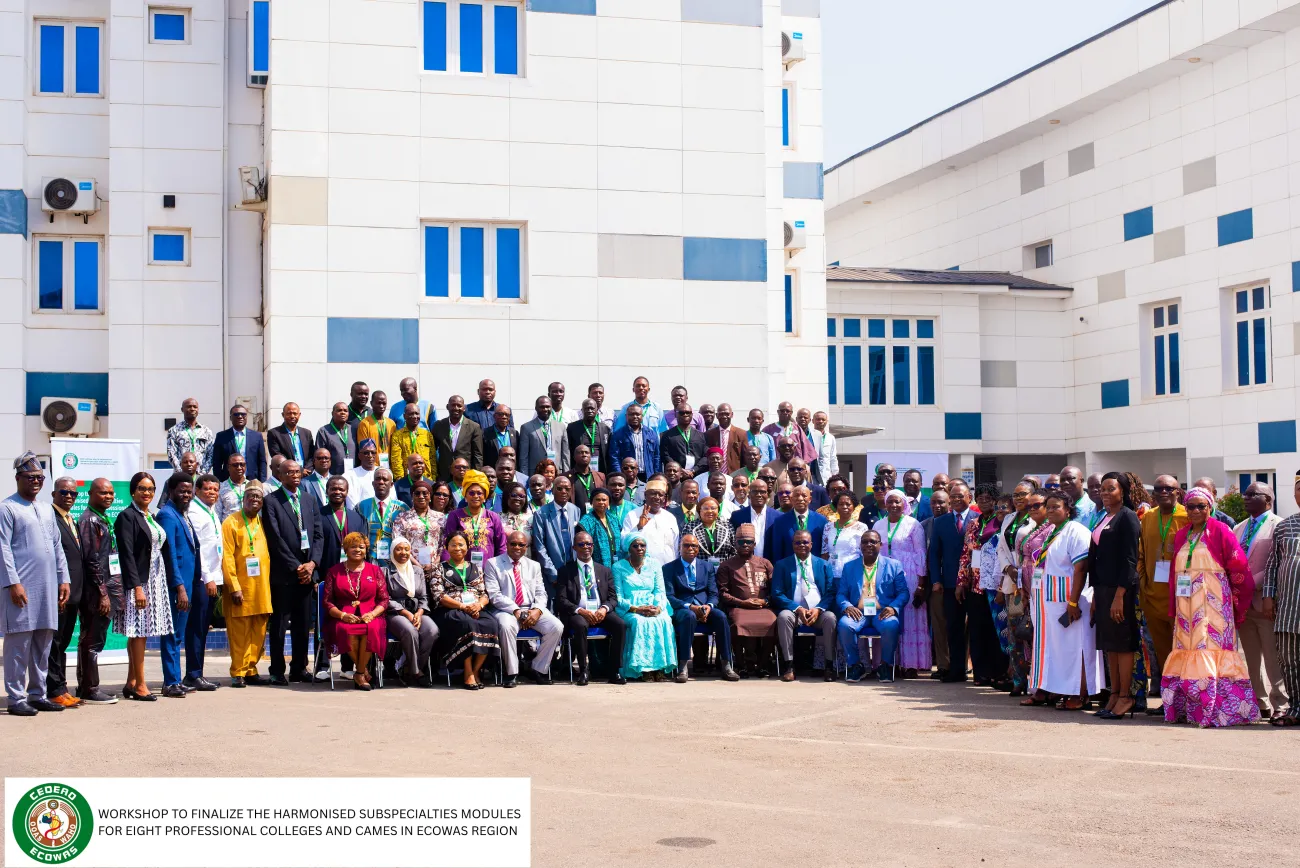
Improving access to specialised medical care and reducing the need for patients to seek treatment outside West Africa are among the priorities of a three-day regional workshop convened by the West African Health Organisation (WAHO), the specialised Institution of the Economic Community of West African States (ECOWAS) responsible for health issues. The meeting, which opened on 9 November 2026 in Abuja, Nigeria, aims to finalise harmonised subspecialty training modules for eight professional colleges and the African and Malagasy Council for Higher Education (CAMES).
Across West Africa, shortages of highly qualified specialists, inadequate medical equipment and differences in professional training standards continue to limit access to advanced healthcare services. The workshop, scheduled for 9–11 November 2026, brings together professional colleges, universities, training institutions and regulatory bodies to develop common standards that will strengthen specialist training and improve healthcare delivery across Member States.
Speaking on behalf of the Director General of WAHO, Professor Palokinam T. PITCHE, Professor Joseph OLORUNDA stressed that improving healthcare requires not only training more professionals but also creating conditions that enable them to develop their skills, remain motivated and serve communities where they are most needed. He highlighted WAHO's contribution to harmonising 58 health professional training curricula and supporting specialised training institutions and centres of excellence across the region.
Professor Koffi BALOGOU, Chairperson of the Regional Council for Health Professionals’ Education, emphasised that harmonised curricula must translate into better training and safer patient care. He called for stronger quality assurance, effective accreditation mechanisms and a practical roadmap to ensure that agreed standards are implemented across training institutions.
For Professor Yao TETTEY, representing the West African Postgraduate Medical and Professional Colleges, expanding subspecialty training must go hand in hand with investment in medical infrastructure and equipment. He warned that the absence of adequate facilities can force highly trained specialists to leave their home countries, depriving patients of essential services and increasing dependence on medical treatment abroad.
Professor Ulrich VODOUHE, representing the Faculty of Health Sciences, highlighted the importance of ensuring that patients receive safe, high-quality healthcare regardless of where they seek treatment within the region. He stressed that harmonised training standards would strengthen professional competencies, improve the consistency of healthcare services and reinforce public confidence in health systems.
Officially opening the workshop on behalf of Nigeria's Coordinating Minister of Health and Social Welfare, Professor Muhammad Ali PATE, Dr Dakum LONGJI called for common training standards, mutual recognition of qualifications and stronger accreditation mechanisms. He emphasised that the success of regional harmonisation should ultimately be measured by tangible improvements experienced by health professionals and patients.
The workshop is expected to finalise harmonised subspecialty training modules and advance practical arrangements for their implementation, contributing to a future in which more West Africans can access quality specialised healthcare closer to home.


