
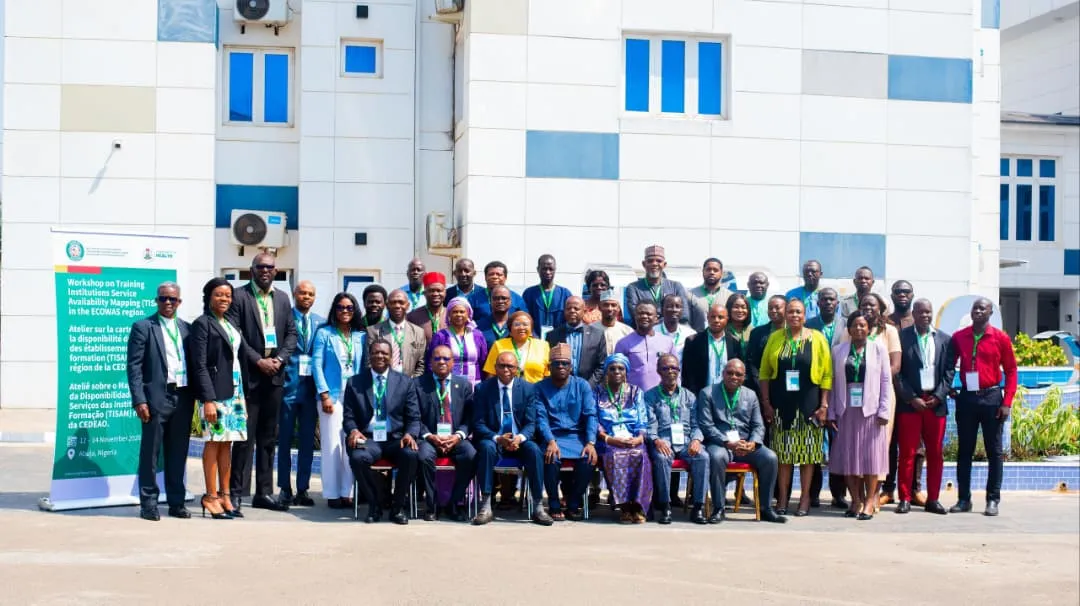
Improving access to quality healthcare across West Africa requires not only more health professionals, but also better training opportunities and a more equitable distribution of qualified personnel. To address these challenges, the West African Health Organisation (WAHO), the specialised Institution of the Economic Community of West African States (ECOWAS) responsible for health issues, has convened a three-day Workshop on Training Institutions Service Availability Mapping (TISAM) in the ECOWAS Region, taking place in Abuja, Nigeria, from 12 to 14 November 2026.
The initiative aims to establish a comprehensive and reliable database of health training institutions, their geographical locations, available programmes, infrastructure and training capacities. The findings will help Member States identify gaps, guide investments and ensure that health professionals are trained in the numbers and specialities required to meet the healthcare needs of their populations.
Opening the workshop on behalf of Nigeria's Coordinating Minister of Health and Social Welfare, Professor Muhammad Ali PATE, Dr Dakum LONGJI, WAHO Liaison Officer for Nigeria, called for a harmonised mapping framework, clearly defined national responsibilities and an agreed implementation timeline. He stressed that the exercise must translate into practical decisions on where to expand training capacity and how to ensure that qualified professionals are available where they are most needed.
Representing the Chairperson of the ECOWAS Authority of Heads of State and Government, Professor Awa SECK highlighted the importance of aligning health professional training with the actual needs of populations, while strengthening evidence-based planning and regional cooperation. She emphasised that reliable information on existing training capacities would enable Member States to identify gaps and direct investments towards priority needs.
Speaking on behalf of the Director General of WAHO, Professor Palokinam T. PITCHE, Professor Joseph OLORUNDA emphasised that reliable information is essential to addressing health workforce shortages and improving recruitment, deployment and retention. He outlined plans to complete data collection and analysis, with country-level validation expected to begin in the first quarter of 2027.
On behalf of the Deans of Faculties of Health Sciences in the ECOWAS region, Professor Cyriaque Comlan DEGBE called for improved training quality, reduced trainee attrition and long-term workforce planning. He also advocated stronger academic cooperation to maximise existing regional training capacities.
Professor Yao TETEY, representing the West African Postgraduate Medical Colleges, emphasised the need for accreditation, mutual recognition of qualifications and greater access to specialised training opportunities to facilitate professional mobility within the region.
For his part, Professor John MULBAH, the president-elect of the Regional Council for Health Professionals Education, and representing the incumbent President, Professor Koffi BALOGOU, stressed the importance of accurate data, transparency and institutional accountability to ensure that the mapping findings provide a credible basis for policy decisions and investments.
The workshop is expected to advance a harmonised regional mapping framework, strengthen coordination among Member States and define practical steps towards completing the exercise.
Through this initiative, WAHO reaffirms its commitment to strengthening health workforce development and supporting ECOWAS Member States in building resilient health systems capable of delivering accessible, quality healthcare to West African populations.
WAHO: Promoting better health through regional integration.


